
Enterprise IT has reached a tipping point. Change is now continuous, but governance is still built around projects. As hybrid environments expand, this mismatch creates a control gap where visibility fades and risk builds.
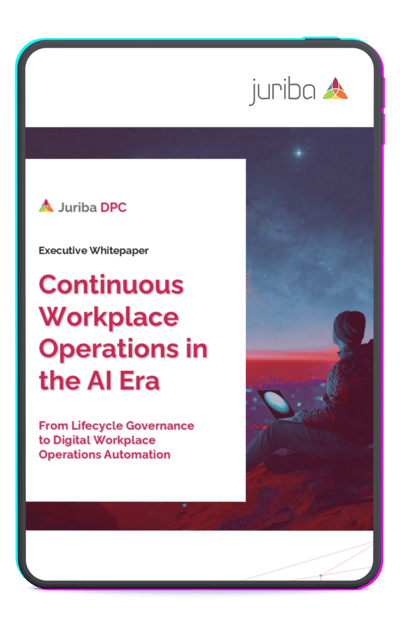
Download this whitepaper to see why continuous lifecycle governance is becoming essential, and how Digital Platform Conductor (DPC) solutions provide the control layer needed to maintain visibility, coordination, and control at scale.

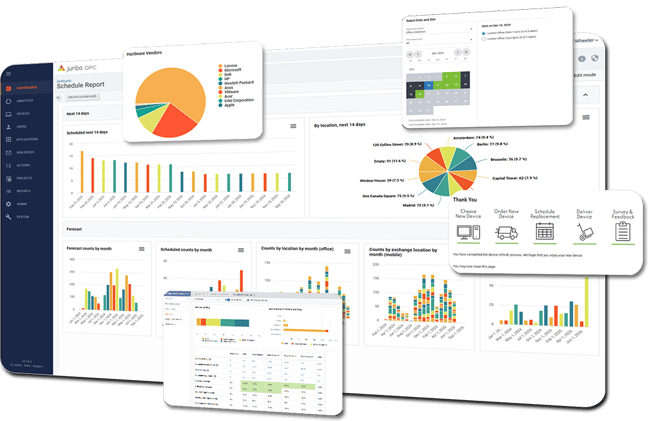
Stop guessing and start proving progress. Take the interactive demo and see how Juriba DPC would orchestrate your next migration or day-to-day endpoint program.
See where you sit on the Continuous Control Maturity Model and the steps it would take to reach the next level.
Andrew Cooper, Release & Protect Manager, End User Services - Nationwide Building Society
Ralf Kraski, Project Manager - Vattenfall
Still have questions?
This whitepaper explains why traditional, project-based approaches to IT change no longer work in modern hybrid environments, and introduces the concept of continuous lifecycle governance through Digital Platform Conductors.
A Digital Platform Conductor is a control layer that sits across your existing IT tools, providing visibility, orchestration, and governance across infrastructure, applications, and digital workplace environments.
Because change is now constant. Operating systems, applications, and security requirements evolve continuously. Without ongoing governance, organisations lose visibility, control, and audit readiness over time.
The control gap refers to the loss of visibility, ownership, and compliance that occurs when organizations try to manage continuous change using periodic, project-based governance models.
It is designed for enterprise IT leaders, including Heads of EUC, Digital Workplace leaders, CIOs, CTOs, and governance or compliance stakeholders, who are responsible for managing complex IT environments.
No. A DPC works alongside existing tools, connecting them and providing a unified control layer to manage lifecycle processes, governance, and decision-making.
Organizations can reduce audit effort, improve compliance, gain real-time visibility, lower long-term transformation costs, and demonstrate measurable business value from IT operations.